
 Facebook
 X
X
 Pinterest
 Copy Link
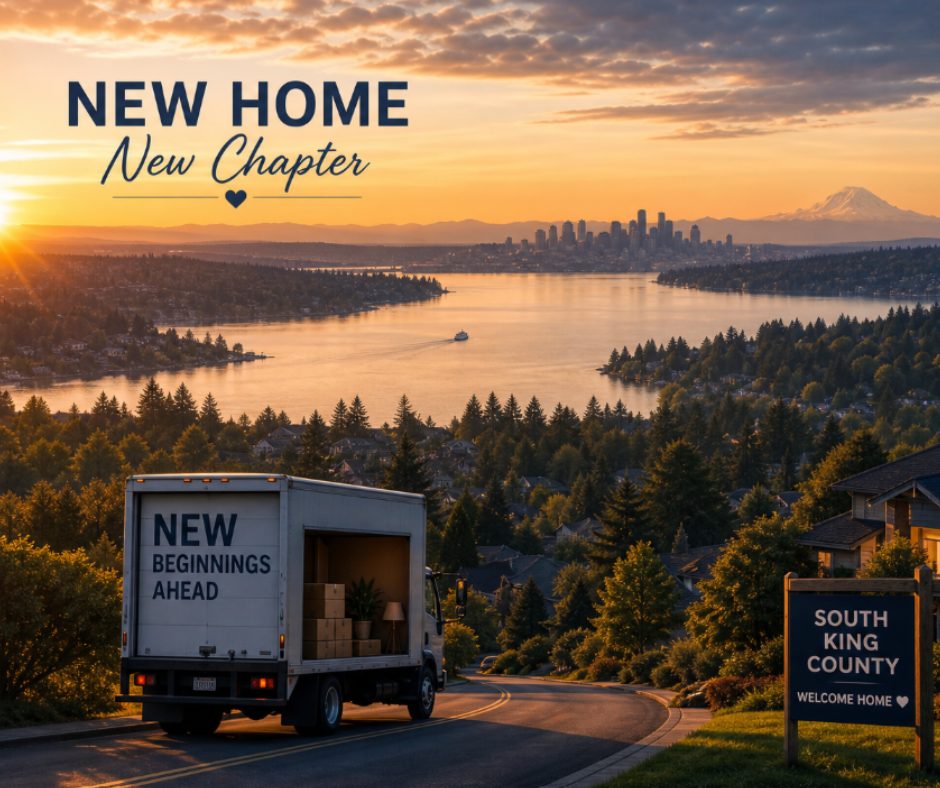
The numbers make the case fast. King County’s median home sale price sits at approximately $850,000 in 2026. Kent’s median comes in at $649,900, and Auburn’s lands at $617,000. That gap, roughly $200,000 to $235,000 depending on which city you’re comparing, is not a rounding error. It’s a finished basement, a larger lot with room for a trampoline and a garden, or a mortgage payment that doesn’t require two high incomes just to qualify. For families relocating from expensive coastal markets, that spread often represents a genuine lifestyle upgrade rather than a compromise. The trade is not suburban sprawl and strip malls. Kent has a revitalized downtown corridor with an expanding restaurant scene and genuine neighborhood density, a claim backed by multiple city-approved mixed-use projects underway along Meeker Street and the downtown core. Auburn sits at a geographic crossroads that works well for dual-income households splitting their commutes between Seattle and Tacoma. Covington and Maple Valley lean quieter and more nature-oriented, with Tahoma School District drawing families from across the region. The key is matching your household’s lifestyle register to the right community before you fall in love with a listing that’s in the wrong one.
Schools, Safety, and What the Data Actually Tells You
Families relocating to South King County encounter four primary school districts: Kent School District, Auburn School District, Tahoma School District serving Maple Valley and parts of Covington, and Federal Way Public Schools for the western corridor. Tahoma is the one most consistently cited by local families as a primary draw, and its standing in OSPI performance data backs that reputation. Tesla STEM High School remains one of the high-profile academic options in King County overall, worth researching for families with academically motivated high schoolers. School performance varies significantly by individual school within any district, which means checking specific school assignment boundaries by address, not just district affiliation, before committing to a neighborhood.
Reading Safety Data Without Misleading Yourself
On safety, available 2024 data puts Kent’s violent crime rate at 4.74 per 1,000 residents and property crime at 36.53 per 1,000, both above the Washington state averages of 3.26 and 24.67 respectively. Kent also records the highest total crime volume in South King County, followed by Auburn, but these are also the region’s most populous cities. (Note: Renton, which some datasets include in South King County comparisons, reported higher total incidents than Auburn in 2020 figures; always confirm the year and source when comparing city-level totals.) Raw totals without population context mislead more than they inform. The King County Sheriff’s NIBRS dashboard provides street-level incident data for contract cities including Covington and Maple Valley, and that tool is far more useful than city-level averages when you’re evaluating a specific block. Drive your target streets at different times of day during your visit; no dashboard replaces ground-level observation.
Real South King County Commute Times to Seattle and Tacoma
Here is what you can realistically expect by city:
- Kent to downtown Seattle: 30 to 45 minutes by car, 50 to 75 minutes by transit using Sounder or bus connections; 20 to 35 minutes to Tacoma by car, with Sounder as the strongest rail option.
- Auburn to downtown Seattle: 40 to 60 minutes by car, 65 to 95 minutes by transit; 20 to 35 minutes to Tacoma, with Sounder providing the most direct rail connection in the 25 to 45 minute range.
- Federal Way to downtown Seattle: 35 to 55 minutes by car; King County Metro adjusted routes 181, 182, 183, and 187 in 2026 to better connect Federal Way riders with 1 Line stations, improving the overall transit picture for that corridor.
- Covington/Maple Valley to downtown Seattle: Drive 15 to 20 minutes to Kent or Auburn stations, then add the Sounder leg; total door-to-door times typically run 60 to 90 minutes depending on timing.
For households where both adults commute on different schedules or to different destinations, mapping both routes before committing to a specific neighborhood is essential. Auburn’s position between Seattle and Tacoma makes it one of the most logistically flexible South King County neighborhoods for dual-commute households. Kent’s Sounder access makes it the strongest transit-forward choice for single-corridor Seattle commuters who want to skip the freeway entirely on most days.
How to Narrow Your Shortlist and Move with Confidence
Before visiting each community, work through this checklist to get meaningful information out of each trip:
- Check school assignment boundaries by specific address, not just district name, using the district’s online enrollment tool.
- Drive both the peak-hour commute route and a typical errand loop (grocery store, pharmacy, kids’ activities) to test real-world friction.
- Walk the nearest park, trail, or open space to gauge how much outdoor access matters to your household’s daily rhythm.
- Research any zoning changes or planned development along major corridors, particularly SR-516, SR-18, and the Kent Des Moines Road transit corridor, where new density is actively expanding.
- Use the King County Sheriff’s NIBRS dashboard to pull incident data for the specific streets you’re considering, not the city as a whole.
This is where working with a genuinely local expert changes the outcome. Tony Gregg of Coldwell Banker Bain brings decades of on-the-ground experience in South King County, the kind of hyperlocal knowledge that tells you which streets in Kent are trading above asking price, which Maple Valley neighborhoods feed the strongest Tahoma school assignments, and which Auburn blocks are three lots from a planned commercial development that will reshape the area within a few years. For families relocating to South King County from out of state, that depth of local context compresses what could be months of research into a focused, productive visit. Tony also connects clients with Pacific Northwest lenders and community resources before they arrive, so the financial groundwork is already in place when it’s time to make an offer.


